How Much Does It Cost to Study in India for International Students? (2026 Breakdown)
India is one of the most affordable study destinations in the world, but costs vary. This guide breaks down tuition fees by university and course type, living costs, and the hidden costs most students underestimate by 20–30%.


By Pratik Gandhi, international education consultant for Indian universities | Last updated: May 19, 2026
India is not only one of the fastest-growing GDPs in the world but also one of the most cost-effective destinations for higher education globally. Still, the actual amount you will spend on your education depends heavily on which university you choose, which city you live in, and which program you enrol in.
This guide breaks down every major cost category with verified data from university admissions offices, official fee circulars, and on-the-ground student reports.
What International Students Actually Pay to Study in India
Tuition at universities in India ranges from $500 to $8,000 annually. Overall yearly expenses, including tuition and living costs, generally range from $2,000 to $12,000 USD. The difference between a private university in a lesser-known city and a public college in Mumbai is vast. Based on the programs we track, approximately 1 out of 3 students complete a four-year arts degree for under $8,000 USD overall. Some utilise that amount in just one year for a top-tier MBA.
How India Compares to Other Study Destinations
Before getting into specifics, it helps to place India in context. The table below compares annual costs across the most common destinations for international students.
| Destination | Typical Annual Tuition (USD) | Typical Annual Living (USD) |
|---|---|---|
| India | $360–$7,500 | $1,800–$4,200 (Numbeo) |
| UK | $13,000–$50,000 (UCAS) | $14,000–$18,000 (Numbeo) |
| Canada | $20,000–$30,000 (Statistics Canada) | $12,000–$15,000 (Numbeo) |
| Australia | $20,000–$45,000 (Study Australia) | $14,000–$18,000 (Numbeo) |
| Germany | $0–$3,500 (DAAD) | $11,000–$13,000 (Numbeo) |
Sources: UCAS, Statistics Canada, Study Australia, DAAD, Numbeo
Total Program Cost Comparison (India vs. the World)
| Country | 4-Year B.Tech (Total) | 2-Year MBA (Total) |
|---|---|---|
| India | $12,000 – $24,000 | $30,000 – $80,000 |
| Germany | $4,000 – $8,000 (living only) | $8,000 – $16,000 |
| UK | $140,000 – $180,000 | $90,000 – $130,000 |
| Canada | $120,000 – $160,000 | $60,000 – $100,000 |
| Australia | $160,000 – $200,000 | $80,000 – $120,000 |
| USA | $200,000+ | $150,000+ |
India sits in the lowest quartile for overall education costs among all major study destinations. Germany is the only country with lower tuition, but its living costs are significantly higher, making India the more affordable option when you look at the total cost of education.
What You Will Actually Pay: Tuition Fees
Tuition is your highest variable cost. It fluctuates according to three factors: public versus private university, prestige and your program/degree. Apart from tuition fees, there are other fees also involved, such as exam fees, development charges, and refundable deposits, but they are mostly low compared to tuition fees.
Annual Tuition by University (2026)
| University | Course / Level | Annual Fee (INR) |
|---|---|---|
| JNU (Public) | B.A. / M.A. (Arts) | ₹2,000 – ₹5,000 |
| Delhi University (Public) | B.A. (Hons) | ₹15,000 – ₹25,000 |
| Pune University / SPPU (Public) | B.Sc. | ₹20,000 – ₹40,000 |
| University of Mumbai (Public) | B.Com | ₹25,000 – ₹50,000 |
| IIT Delhi / Bombay / Madras (Public) | B.Tech | ₹2,00,000 – ₹3,50,000 |
| IIT Delhi / Bombay / Madras (Public) | M.Tech / PG | ₹2,50,000 – ₹4,00,000 |
| LPU (Private) | B.Tech / BBA | ₹2,00,000 – ₹4,00,000 |
| Manipal / VIT (Private) | B.Tech / PG | ₹3,50,000 – ₹7,50,000 |
| Symbiosis / SCMS (Private) | MBA | ₹8,00,000 – ₹15,00,000 |
| Private Medical Colleges | MBBS / BDS | ₹8,00,000 – ₹25,00,000+ |
Fee Ranges by Course Level
- Undergraduate (B.Tech, B.A., B.Sc, B.Com): ₹50,000 – ₹3,00,000/year for public; ₹1,50,000 – ₹8,00,000/year for private
- Postgraduate (M.Tech, MBA, M.A.): ₹60,000 – ₹4,00,000/year for public; ₹3,00,000 – ₹12,00,000+/year for private
- Medical (MBBS, BDS): ₹2,00,000 – ₹7,00,000/year for government colleges; ₹8,00,000 – ₹25,00,000+/year for private deemed universities
- PhD: ₹30,000 – ₹2,00,000/year, often offset by assistantships or stipends
Always check the International Category seat fees directly with the institution's admissions office.
Which University Has the Lowest Fees?
For tuition alone, JNU has one of the lowest fees as humanities courses are priced below $100 USD per year. Delhi University-affiliated colleges, Jadavpur University (Kolkata), and Mumbai University represent the next tier. The trade-off: each institution offers only 50–200 seats for international students, making competition intense.
Which IIT Has the Lowest Fees?
All IITs charge identical core tuition under the DASA scheme. IIT Dharwad and IIT Jammu have an annual fee of approximately ₹3,00,000 ($3,600 USD). A complete four-year B.Tech at any IIT costs ₹6–14 lakh ($7,200 – $16,800 USD) in total. SAARC nationals may receive additional concessions. There is also a one-time DASA registration charge of $300 if you are applying under the DASA scheme.
The SAARC Quota Advantage
Students from SAARC countries like Nepal, Bangladesh, Sri Lanka, and others are eligible for significantly reduced fees at public universities - both central and state. This is one of the most underutilised cost advantages available to students from these countries.
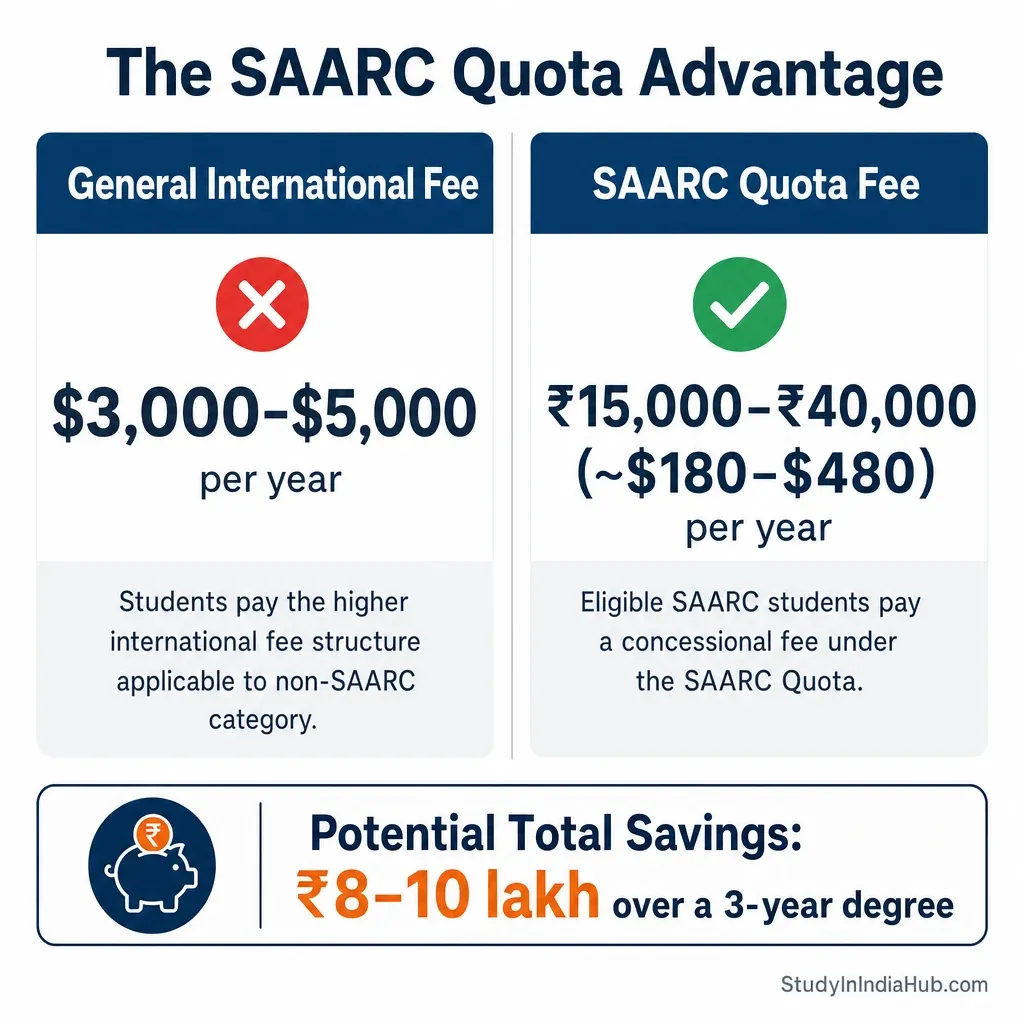
A Nepali or Bangladeshi student admitted through the SAARC quota at BHU or Mumbai University typically pays fees comparable to local Indian students - around ₹15,000 – ₹40,000 per year for arts and science courses. The only catch is that SAARC seats are limited, and applications must go through the designated channel, usually the Indian consulate in your home country, before the general admission window opens.
The Central University of Himachal Pradesh has a dedicated SAARC fee bracket starting at just INR 2,000 for certain programs.
However, this is just for concessions on the tuition fees. There are also non-tuition costs which remain the same for SAARC and Non-SAARC students. And when you are living in a country for 4 years, the non-tuition costs, including the cost of living, tend to compound.
This reflects a pattern we see consistently: students tend to underestimate non-tuition costs by 20–30%, even when tuition comes in at or under budget. Build that buffer into your plan from the start.
Living Costs: What You Will Spend Month to Month
Monthly living expenses in India range from ₹10,500 to ₹42,000 ($126 to $504 USD), depending on the city, accommodation type, and lifestyle. Accommodation and food together account for roughly 70% of total monthly spend.
Three-Mode Monthly Budget
| Expense | Budget Mode | Moderate Mode | Comfortable Mode |
|---|---|---|---|
| Accommodation | ₹5,000 – ₹12,000 | ₹8,000 – ₹15,000 | ₹15,000 – ₹25,000 |
| Food | ₹4,000 – ₹7,000 | ₹6,000 – ₹10,000 | ₹9,000 – ₹15,000 |
| Transport | ₹500 – ₹2,000 | ₹1,500 – ₹3,000 | ₹2,500 – ₹5,000 |
| Utilities / Internet | ₹800 – ₹2,000 | ₹1,500 – ₹3,000 | ₹3,000 – ₹5,000 |
| Books / Personal / Misc | ₹2,000 – ₹5,000 | ₹3,000 – ₹6,000 | ₹5,000 – ₹10,000 |
| Monthly Total | ₹12,300 – ₹28,000 | ₹20,500 – ₹37,000 | ₹34,500 – ₹60,000 |
Accommodation
- On-campus university hostel: ₹5,000 – ₹12,000/month, furnished, typically includes meals and laundry
- Shared PG (Paying Guest): ₹8,000 – ₹20,000/month, furnished, communal kitchen, utilities included
- Shared private apartment (2–3 housemates): ₹8,000 – ₹25,000/month
What I would suggest is always consider the university's hostel facility before arranging private housing outside the college. The cost difference can be ₹8,000 – ₹15,000 per month for essentially the same quality of living.
Food
Same goes for food. Students who sign up for the institutional mess plan from day one spend approximately 40% less on food than those who eat out regularly. In Bangalore, dining out frequently costs ₹9,000 – ₹12,000/month while a mess or tiffin arrangement costs ₹4,000 – ₹7,000/month.
Buying groceries from local grocery shops rather than supermarkets can also reduce grocery spend by 30–40%.
Transport and Connectivity
Public transport (bus and metro) costs ₹500 – ₹2,000/month in Delhi, Bangalore, Mumbai, and Chennai.
Mobile plans are inexpensive:
- Airtel (28 days, 1GB/day, unlimited calls): ₹299
- Airtel unlimited (28 days, 300GB FUP): ₹399
- Jio (28 days, 2GB/day, unlimited calls): ₹499
Shared apartment utilities (electricity, water, internet) add approximately ₹1,000 – ₹2,000/month.
City-by-City Cost Comparison
The city you study in can shift your annual living costs by $1,500 USD or more. Below is a comparison of accommodation costs across the three most common student cities.
| City | Shared Apartment (₹/mo) | On-Campus Hostel (₹/mo) | PG Accommodation (₹/mo) |
|---|---|---|---|
| Mumbai | ₹12,000 – ₹30,000 | ₹5,000 – ₹15,000 | ₹8,000 – ₹20,000 |
| Delhi | ₹10,000 – ₹25,000 | ₹5,000 – ₹12,000 | ₹8,000 – ₹18,000 |
| Pune | ₹8,000 – ₹20,000 | ₹4,000 – ₹12,000 | ₹7,000 – ₹15,000 |
Sources: Numbeo Mumbai, Numbeo Delhi, Numbeo Pune
Mumbai is the only city that genuinely requires a financial buffer from day one. Shared apartments start at ₹12,000 and rise quickly near major campuses. Hostel options are limited. Consider Mumbai only if your university is located there or if you have scholarship support.
Delhi offers affordable public transport through its metro network and moderately priced accommodation. It is well-positioned geographically for students who plan to travel within India.
Pune offers the best value overall with lower accommodation costs, a large international student community (Savitribai Phule Pune University hosts over 14,000 international students from 102+ countries), and an active international admissions support structure.
Students from Nepal and Bangladesh, with whom we have worked, report monthly expenditures of ₹18,000 – ₹22,000 in Pune or Bangalore, with rent in shared PG (₹6,000 – ₹8,000) and food (₹5,000 – ₹6,000) accounting for the majority. Their actual costs typically run 15–20% above initial estimates, due to undervalued transport, mobile data, and occasional expenses such as seasonal clothing or health check-ups. We recommend setting aside ₹3,000 – ₹4,000 per month as a buffer for your first semester.
Costs You Must Budget for Separately
Apart from your tuition and living costs, several one-time and recurring costs are easy to overlook.
- Pre-arrival costs: Visa fees, FRRO registration, and health insurance.
- Travel costs: Taking flights from India back to home country for vacation. Any vacation costs in India.
Final Thoughts
Deciding to study in India is great, but choosing the right university without spending a bomb is what will make that decision fruitful. Factor in the city, the accommodation choice, and the hidden costs such as health insurance, and flights.
The gap between a public university in Pune and a private college in Mumbai is not just about prestige; it can mean a difference of ₹5–8 lakh over a three-year course. So choose your college and city together because that is what makes the most difference in terms of budget. And if you do so, undoubtedly, India remains one of the most affordable and academically credible places in the world to earn a degree.
Related guides
- Is India Cheaper Than UK/Canada for Students? (Real Cost Comparison 2026)
- Scholarships for International Students in India (2026 Complete List)
- Cheapest Countries to Study Abroad: Global University Fee Comparison (2026)
- Study Loans for International Students Coming to India (2026 Guide)
- MBA in India for International Students: Best Colleges, Fees & ROI (2026)