Is India a Good Place to Study for International Students? (Honest Review 2026)
Over 46,000 international students studied in India in 2022. Most came for one reason: a recognized degree at a cost no Western country can match. The value is real — but so are the trade-offs.

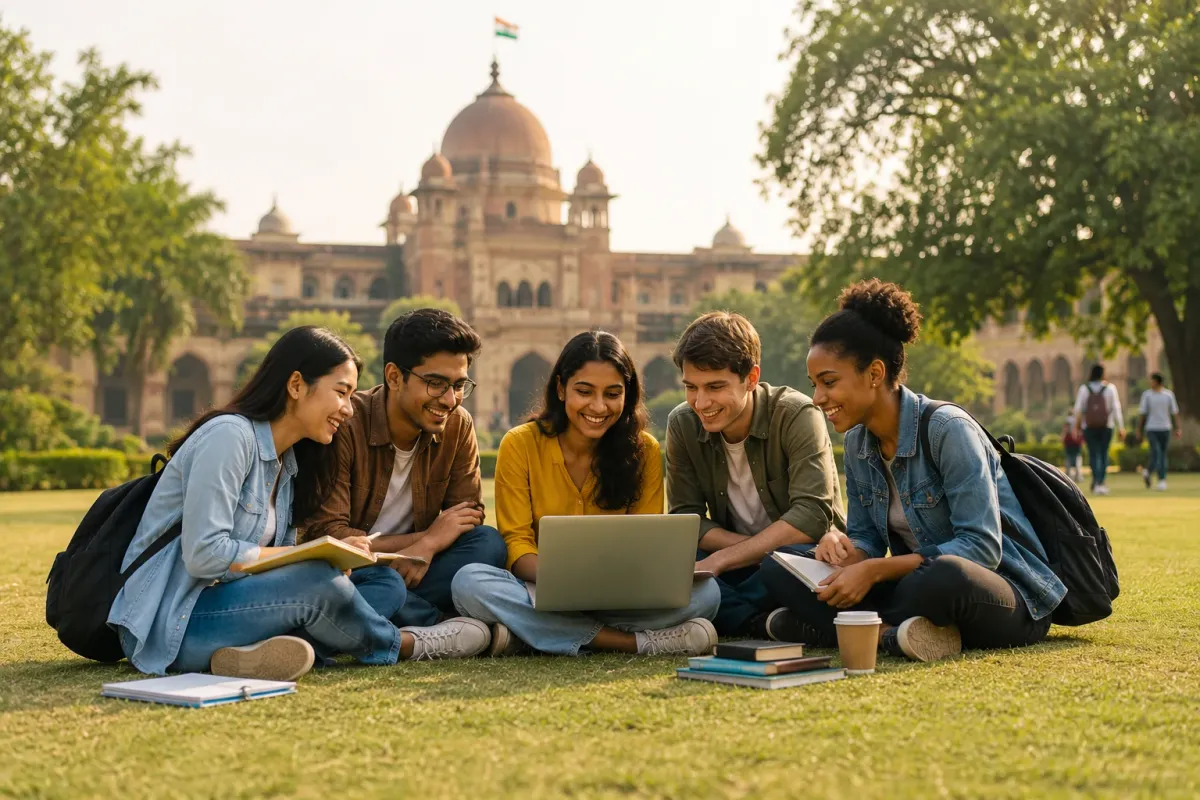
As a student, you have an opportunity to study anywhere in the world, but is India the right destination? Well, over 46,000 international students from 170 countries enrolled in Indian colleges in 2022 and that number has climbed steadily since.
The reason is simple: for engineering, medicine, business, and sciences, India offers a combination of brand-name institutions and genuinely low costs that no Western country can match. A B.Tech at Mumbai University costs $1,000–$2,000 per year. The IIMs post near-100% placement rates. IIT Bombay sits at #118 globally in QS 2025 rankings.
But India works well for a specific kind of student, in a specific kind of program, at a specific tier of institution. This review is about helping you figure out whether that's you.
India by the Numbers: Who Studies There and Why
India hosts international students from across 170 countries. Most students come from Nepal, Bangladesh, Afghanistan, and several African nations; students who are often drawn by proximity, cultural familiarity, and cost. Savitribai Phule Pune University (SPPU) alone hosts 10,000–14,000 international students from over 100 countries, making it one of the densest international student clusters in the country.
Admission requirements vary significantly by country of origin:
| Student Origin | Entry/Equivalency Requirement |
|---|---|
| Nepal | No visa required; only university registration |
| Bangladesh | HSC recognized as equivalent to Indian Class 12 |
| UAE | Secondary Certificate recognized; CBSE/IB accepted directly |
| Kuwait | Thanawiya Amma requires AIU equivalency |
One thing worth flagging upfront: India does not offer a post-study work visa. Most international graduates either return home or move to a third country. An Employment Visa requires a minimum annual salary of ₹16.25 lakh (approximately $25,000), which most entry-level roles don't meet.
The Pros of Studying in India
For international students, studying in India comes with a number of pros including price difference, logistics and brand names. Let's dive in further:
The cost gap is significant
For most international students, the financial case is the starting point. Engineering at Mumbai University costs $1,000 - $2,000 per year for international students. A comparable program in the US runs $25,000–$40,000 annually. For two-year postgraduate programs like an MBA or MSc, mid-tier Indian institutions come in at roughly one-quarter to one-fifth of equivalent UK tuition. Medicine and pharmacy are even more stark, and government-subsidised seats can cost under $1,000 per year.
Brand names that travel
At the top tier, Indian institutions carry real weight. IIMs and IITs post near-100% placement rates within three months of graduation most years. IIT Bombay is ranked #3 nationally for engineering (NIRF 2024) and #118 globally (QS 2025). Both IIT Bombay and Mumbai University hold A++ NAAC accreditation which is the highest grade in India's national quality framework.
That brand value is concentrated in engineering, IT, medicine, and business. Outside those fields, and outside the top tier of institutions, international employer recognition becomes less predictable. The advice here is consistent: evaluate the program and department, not the country name.
Logistics that work
Logistically speaking, India is one of the best countries for your higher education. The S-1 student visa is entirely document-based and no interviews are required. Students from Nepal don't need a visa at all, only university registration is required. Most major university programs are taught in English.
India's cultural intensity is either a draw or a friction point, depending on the student. Learning in one of the world's fastest-growing economies, navigating real resource constraints and working in classrooms with 15+ nationalities. These experiences translate into practical adaptability in a way that a more managed international student environment doesn't.
The Cons and Challenges to Prepare For
Now with pros, there are also few challenges that you should be prepared for. Let's discuss them in detail:
Bureaucracy takes longer than you expect
The FRRO (Foreigners Regional Registration Office) registration is mandatory within 14 days of arrival if your stay exceeds 180 days. The process itself, from getting the right paperwork from your university, submitting it, following up; routinely takes longer than students expect. Last year, one of the students at Delhi University needed a standard university letter for a visa extension, and it took him three weeks and four separate visits to sort out.
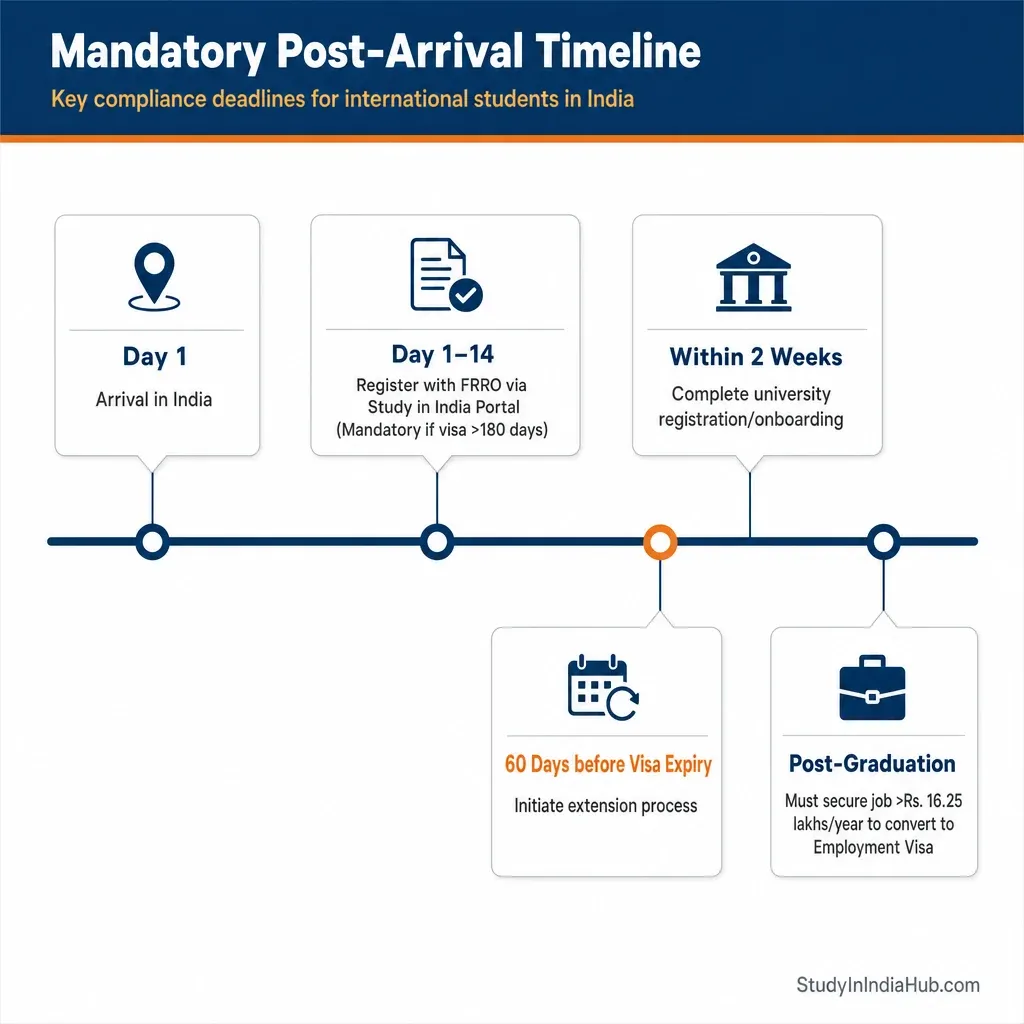
The student visa is valid for up to five years or the course duration, whichever is shorter. Initial processing takes a minimum of five business days, but errors in admission documents or financial records can delay it considerably. Apply at least two weeks before you need it.
Infrastructure varies sharply
Infrastructure is an underrrated con that not most students prepare for. IIT Delhi and MumbaiUniversity have advanced labs, high-speed internet, and well-maintained facilities. Its not the same for tier 2 and tier 3 universities. Older buildings, inconsistent connectivity, and dated libraries are common outside the top institutions. This isn't a dealbreaker, but it's worth knowing before you commit to a university you've only seen on a brochure.
Recognition gaps outside STEM
An IIT STEM degree opens doors internationally. A degree from a mid-tier regional institution may prompt questions from foreign employers who aren't familiar with the institution. Before enrolling, research how employers in your home country and target industry recognize degrees from your specific university.
What It Actually Costs
Calculating your expenses in advance is a good idea as it can avoid any last minute problems. Most international students spend ₹10,000–₹30,000 per month on living expenses. Annual living costs at public universities in major cities run ₹1,20,000–₹2,40,000. If you choose private accommodation and a more comfortable lifestyle, budget $15,000–$25,000 per year all-in. Use the public university number as your floor; add a 15–20% buffer for the first year.
City matters more than most students realise:
| City | Monthly Budget (INR) | What It Signals |
|---|---|---|
| Hyderabad | ₹7,000–₹12,000 (food + utilities, shared housing) (Wise) | Cheapest if you keep housing shared |
| Pune | From ₹8,000 (Numbeo) | Lower pressure on rent and daily spend |
| Mumbai | From ₹15,000 (Numbeo) | Highest rent, transport, overall burn |
| Delhi | ₹10,000–₹15,000 (rent only) (braingainmag.com) | Seasonal electricity bills add up |
If budget is tight, the ICCR Scholarship Programme is worth checking out. It offers 640 positions globally and can cover tuition. Applications for the 2026–27 cycle ran from February to April 2026 via the A2A Portal.
Best Cities for International Students: Mumbai, Pune and Beyond
The city you choose influences your network and opportunities after graduation just as much as the university itself. This is a comparison of the four primary hubs.
Pune: The Student City
Pune is the first city most undergraduates and early master's students should look at. SPPU's International Centre handles admissions, accommodation, FRRO registration, and orientation from a single office, which is a genuine advantage when you're managing paperwork in a new country.
Mumbai: The Career Accelerator
Mumbai is the right choice if your priority is internships, industry connections, and alumni networks in finance, media, or tech. International services at the University of Mumbai operate at the college level, not through a central office, which means that you'll handle more on your own.
Delhi/NCR
Delhi/NCR is also a strong option for management education, with institutions like MDI, IMI, and IIM Lucknow's Delhi campus concentrated in the region. Hospitality programs also benefit from fee reductions of up to 40% for international students at select institutions.
Bangalore : The Tech Hub
Bangalore is the natural fit for engineering, computer science, and tech entrepreneurship, given the startup ecosystem. Campus-level cost and enrollment data isn't always publicly available, so contact institutions directly before making a decision.
| City | Best For | Cost Tier | Support Structure |
|---|---|---|---|
| Pune | Campus community, peer network | Lower | Centralized (SPPU Int'l Centre) |
| Mumbai | Finance/media/tech careers | Higher | Decentralized, college-level |
| Delhi/NCR | Management education, MBA | Higher | Institution-specific |
| Bangalore | Tech, engineering, startups | Higher | College level |
Common Mistakes to Avoid
Before you make a decision, its better to learn from other's mistakes. Here are some common mistakes that students tend to make:
Treating the April–July enrollment window as flexible. Most premier programs don't offer rolling admissions. The deadline is the deadline.
Assuming your student visa permits any work. It doesn't. Violations can result in deportation. If you need income while studying, India is the wrong destination.
Underestimating FRRO timelines. Registration within 14 days of arrival is mandatory for visas over 180 days. Be mindful of the paperwork and the timeline.
Choosing a university based on rankings alone. Cross-check NAAC accreditation, department-level placement data, and whether your home institution will recognize the credits before you commit.
Budgeting only for tuition. Accommodation deposits, local transport, health insurance, and first-month setup costs add up quickly. Build in a buffer.
Final Verdict: Is India Right for You?
India is not the right answer for every international student. But for the right student who are budget-conscious, targeting engineering, IT, medicine, or business, aiming for a recognized institution; it's genuinely hard to beat on value.
The cost advantage is real. A full two-year MBA at a strong Pune institution for $20,000 all-in is not a compromise. Neither is an IIT engineering degree that opens doors across Asia, the Middle East, and global tech hiring. What you're trading is post-graduation flexibility: no built-in work rights and no structured PR pathway.
Related guides
- Best Universities in India for International Students (2026 Rankings + Fees)
- How Much Does It Cost to Study in India for International Students? (2026 Breakdown)
- MBA in India for International Students: Best Colleges, Fees & ROI (2026)
- How to Apply to Indian Universities as a Foreign Student (2026)
- Top 10 Private Universities in Mumbai for International Students (2026)
- Is India Safe for International Students? Safety Guide 2026
- Top Universities in Pune for International Students (2026 Guide)