Top 10 Private Universities in Mumbai for International Students (2026)
If you are planning to study in Mumbai, explore the top private universities for international students in 2026, including fees, placements, accreditation, and visa support to help you choose the right college.

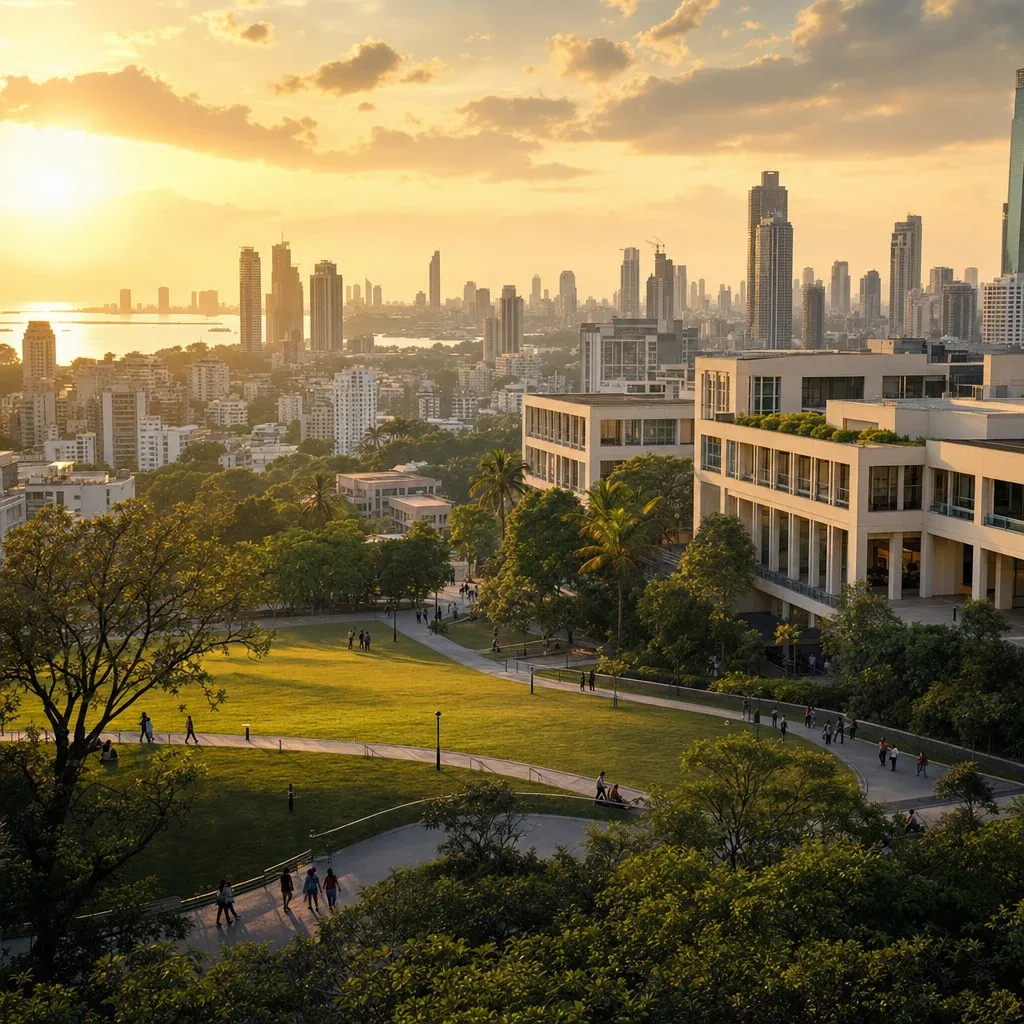
When planning to study in India, most international students choose Mumbai as their preferred location, and for a good reason. It's the country's financial capital, home to the South Asian headquarters of firms like Goldman Sachs, McKinsey, and Deloitte. Internships here aren't at satellite offices and placement networks are real.
But choosing the best university in Mumbai means something different depending on what you're studying, how much you can spend, and where you want to work after graduation.
This article covers the ten private universities and institutions in Mumbai most consistently chosen by international students in 2026. You can find the honest breakdowns of fees, accreditation, placement outcomes, and what distinguishes each one for a foreign-national applicant.
Why Mumbai Works for International Students
Before getting into individual institutions, it's worth understanding what makes Mumbai a good destination.
All programs at the universities listed here are delivered in English. That removes the language barrier that students from Nepal, Bangladesh, and Sri Lanka often encounter at colleges in smaller Indian cities. Credential recognition is also well-established: the HSC from Bangladesh, GCE A-Levels from Sri Lanka, and NEB +2 from Nepal are all considered equivalent to the Indian Class 12; which means your application typically won't get stalled by document rejections.
Mumbai's universities are all registered on the Study in India portal, which handles admissions, FRRO registration, and visa e-filing in one place. The city itself supports a large, long-standing international student community. Shared PG accommodations in Vile Parle, Kharghar, and Panvel are well-established as the practical housing solution for students priced out of Bandra or Powai.
Best Private Universities in Mumbai for International Students
The term "best" depends on multiple factors, so here's a list of the 10 best private university choices for 2026. Every profile listed below includes information on fees, accreditation, placement statistics, and the key differentiator that is important for international applicants.
| University | Key Strength | Approx. Annual Fees (INR) | NAAC Grade | NIRF Overall Rank |
|---|---|---|---|---|
| NMIMS | Management & Business | 12–18 lakhs | A+ | 60–80 band |
| SP Jain | Global Finance & Trading | 15–22 lakhs | A | 70–90 band |
| Symbiosis (Mumbai) | Law & Liberal Arts | 10–16 lakhs | A+ | 62 |
| TISS | Social Sciences & Development | 6–10 lakhs | A+ | 80–100 band |
| ICT Mumbai | Chemical Engineering | 4–7 lakhs | A | 50–70 band (NIRF 2024) |
| Amity Mumbai | Engineering & IT | 8–14 lakhs | A | 100+ band |
| SNDT Women's | Commerce & Science (women-only) | 3–6 lakhs | A | 120+ band |
| Narsee Monjee | Commerce & Economics | 4–8 lakhs | A | 110+ band |
| MIT-WPU Mumbai | Engineering & Management | 7–12 lakhs | A | 90–110 band |
| UBS Karjat | Business & Hospitality | 8–13 lakhs | B+ | 150+ band |
1. NMIMS (Narsee Monjee Institute of Management Studies)
NMIMS is the most reliable placement institution for international management students in Mumbai. Their BBA and MBA programs draw students from over 40 countries. Fees run ₹12–16 lakh/year for BBA and ₹18–24 lakh/year for MBA. NMIMS holds NAAC A++ accreditation and UGC Category-I University designation.
The practical differentiator for international students is the dedicated International Student Office, which handles FRRO registration, visa renewals, and accommodation partnerships. This support prevents the documentation delays that cause problems at smaller institutions.
Their placement partners include Goldman Sachs, Deloitte, and KPMG. Per NIRF 2024 data, NMIMS Mumbai reported a median MBA salary of ₹13.5 LPA with over 92% placement in its premier cohort. Admission letters typically take 4–6 weeks after application submission, so factor that into your July intake timeline.
2. SP Jain School of Global Management
SP Jain is built around international students. Their flagship Global MBA runs across three cities: Mumbai, Singapore, and Dubai, and all three campuses are mandatory, not optional add-ons. Fees go up to ₹10 lakh+/year for BBA and ₹22–28 lakh/year for the Global MBA. SP Jain holds NAAC A accreditation plus dual AACSB and EQUIS accreditations, a combination held by fewer than 1% of business schools worldwide.
Direct credit-transfer partnerships with universities in the US and Europe make the degree portable if you want to finish your studies abroad. NIRF 2024 reported 100% placement for the 2023 batch, with an average salary of ₹14.8 LPA and recruiters including KPMG, EY, and Citibank.
3. Symbiosis International University (SIBM Mumbai)
Symbiosis University is headquartered in Pune but operates the Symbiosis Institute of Business Management (SIBM) in Mumbai. For international students targeting an MBA at a lower price point than NMIMS or SP Jain, SIBM Mumbai is the strongest alternative.
MBA fees run ₹8–10 lakh/year. Symbiosis also holds NAAC A++ accreditation and is ranked #62 in NIRF 2024 overall rankings. SIBM Mumbai's 2024 report showed a median salary of ₹15.2 LPA, with JP Morgan, Bain & Co., and ICICI Bank among the top recruiters.
4. TISS (Tata Institute of Social Sciences)
TISS is the only institution on this list where corporate placement isn't the goal. If you're looking for the leading institution in India for social sciences, public policy, disaster management, or social work, this is it. TISS holds Deemed University status and NAAC A++ accreditation.
Programs most relevant to international students include the MA in Human Resources Management & Labour Relations, MA in Social Work, and MA in Development Studies. International student fees run ₹8–12 lakh/year for most Master's programs, though a number of ICCR-funded positions exist at significantly reduced costs.
5. ICT Mumbai (Institute of Chemical Technology)
If you want to pursue Chemical Engineering, Pharmaceutical Sciences, or Polymer Technology, ICT Mumbai is the top choice in the city after IIT Bombay. It ranks 3rd nationally for engineering (NIRF 2024 Engineering Rankings) and holds NAAC A++ accreditation.
As a publicly funded deemed university, annual tuition for international students runs ₹3–5 lakh, which is significantly less than the business schools on this list. The draw isn't just cost; it's research depth. Active R&D partnerships with Reliance, Tata, Cipla, Dr. Reddy's, and Lupin translate into research internships and strong placement pathways in the chemical and pharmaceutical sectors for high-performing students.
6. Amity University Mumbai
Amity's Mumbai campus sits on the Mumbai-Pune Expressway in Panvel, with over 200 international students enrolled at any time. Engineering fees run ₹10–14 lakh/year; MBA programs are ₹14–18 lakh/year. Amity holds NAAC A+ accreditation.
The campus has its own on-site housing, which eliminates the biggest logistical challenge for international students in Mumbai. Note that hostel fees are billed separately from tuition; always request a written cost breakdown covering both before you commit.
7. SNDT Women's University
SNDT is South Asia's first women's university and runs a structured program for international students. Relevant programs include Fashion Design, Nursing, Social Work, Data Science, and Law. Undergraduate tuition averages around ₹50,000–₹2 lakh/year, which makes it the most affordable option on this list by a significant margin.
SNDT holds NAAC A+ accreditation. On-campus hostel accommodation is guaranteed for international students, and female students from SAARC countries may qualify for tuition fee waivers of up to 40%.
8. Narsee Monjee College of Commerce & Economics (Autonomous)
Narsee Monjee College is a separate institution from NMIMS University. It's an autonomous college affiliated with the University of Mumbai, not a standalone private university. The autonomous status means NM College manages a greater portion of its academic framework while remaining University of Mumbai-affiliated, which is important when assessing credit transfers and degree recognition.
It's on this list because it consistently outperforms private universities in B.Com and BMS (Bachelor of Management Studies) outcomes at a fraction of the cost. Annual fees for aided seats run ₹30,000–₹50,000. International student seats are priced higher, but still among the most affordable commerce options in the city. The college holds NAAC A++ accreditation.
9. MIT-WPU Mumbai (MIT World Peace University)
MIT-WPU offers Engineering, Computer Science, and Management programs and is a workable option if NMIMS is beyond your budget. Engineering fees are ₹8–12 lakh/year; Management runs ₹12–16 lakh/year. MIT-WPU holds NAAC A accreditation.
Around 2% of the 6,000+ enrolled students are international (NIRF Engineering Data). Dual-degree and exchange partnerships with international universities are built into the program structure, not optional extras. Seat quotas are specific and worth checking early. So, if your program of interest has limited seats, apply early.
10. Universal Business School (UBS), Karjat
UBS's fully residential green campus removes Mumbai's housing problem entirely. BBA and MBA programs are offered, with MBA tuition at ₹6–8 lakh/year. UBS is AICTE-approved, and cohort sizes of 40–50 students per group mean direct faculty access and mentorship that larger institutions can't match.
MBA specialisations span Finance, Marketing, HR, Operations, Business Analytics, International Business, IT Management, and Entrepreneurship. The curriculum is shaped by a board of international executives, with real business projects from the first semester. If your goal is entrepreneurship or sustainable finance, the mentorship intensity here is the primary draw.
What You Need to Know Before Applying
Now that we have talked about the best colleges in Mumbai, there are certain things that you should know before you start your application process.
Visas and FRRO
India's student visa (Category S) process is document-based with no formal interview. Apply through the Indian Visa Online portal with your admission letter, academic transcripts, and proof of financial support. Allow a minimum of 5–15 business days for processing (VFS Global). Start collecting documents eight weeks before your travel date and don't wait for the admission letter before beginning.
For medical or paramedical programs, a No Objection Certificate from India's Ministry of Health is required before applying.
If your visa is valid for more than 180 days, you must register with the FRRO within 14 days of arrival via the e-FRRO portal. This applies to all international students, including Nepali citizens from 2025–26 onward. Missing this deadline creates a legal status issue, not just a paperwork delay.
Admission Routes
For admissions, two routes apply to most Mumbai applicants: DASA and direct university admissions.
| Route | Best For | Key Requirement |
|---|---|---|
| DASA (Direct Admission of Students Abroad) | Engineering/Architecture at NITs/centrally funded institutions | SAT scores + 12th-grade equivalence |
| Direct University Admission | Most private universities (NMIMS, Amity, etc.) | 12th-grade equivalence + university-specific criteria |
The Study in India portal handles both routes, plus visa e-filing and FRRO processes in one place.
English Proficiency and Credential Recognition
English proficiency requirements vary by program. Most undergraduate programs require IELTS 6.0–6.5; postgraduate and research programs typically require 7.0 or above. Some universities waive this for students from recognized English-medium schools.
For credential recognition: CBSE, IB, Bangladeshi HSC, NEB +2 (Nepal), and GCE A-Levels (Sri Lanka) are accepted directly. Some boards — including certain UAE secondary certificates, require an AIU equivalency certificate. Start this process early; it takes 4–6 weeks and some boards require additional documentation you may need to source from your home country.
Private vs. Public: What Should You Consider?
There's no doubt that public colleges are cost effective and prominently renowned. Mumbai University holds NAAC A++ accreditation and ranks in the 101–150 global band. Its affiliated network spans 600+ colleges across Maharashtra, including Grant Medical College.
Here's the cost breakup:
| Factor | University of Mumbai (Public) | Private Universities (e.g., NMIMS, Symbiosis) |
|---|---|---|
| Annual Tuition | ~₹2–5 lakh | ₹8–20 lakh total over 4 years |
| International Office | Spread across 600+ colleges | Dedicated international student cell |
| English-medium delivery | Programme-dependent | Consistent across programmes |
| FRRO/visa processing | Slower; decentralised | Faster; high-volume experience |
For cost-sensitive students who don't need centralized support, Mumbai University is worth considering. For students who want streamlined international student services and don't mind the higher fee, the private institutions justify the premium.
Common Mistakes to Avoid
There are certain common mistakes to avoid for a smoother application process:
Accepting verbal fee estimates: Get a written, itemized breakdown covering tuition, accommodation, security deposit, and examination fees; before signing anything.
Using the domestic fee structure to budget: International student fees are typically 1.5–3x the domestic rate, and some programs have separate NRI/foreign national quotas with distinct pricing.
Not confirming UGC recognition: Verify whether the program is UGC-recognized, autonomous, or a private certification before paying any deposit.
Skipping AIU equivalency checks: Apply for your AIU equivalency certificate before or alongside your university application, not after receiving a conditional offer. The 4–6 week processing time has caused students to miss enrollment deadlines.
Assuming all classes are in English: Private Mumbai universities teach in English, but some electives, lab sessions, or guest presentations may be in Hindi or Marathi. Email the programme coordinator and ask for written confirmation of the language of instruction for every module.
Final Thoughts
Mumbai's private universities offer something most Indian cities don't: real corporate access, established international student infrastructure, and programs that travel well regionally.
The right institution depends on your field, your budget, and your post-graduation plan. Whatever you shortlist, request the international student fee schedule, accommodation notice, and exam fee circular from each institution before comparing. The number on the website is not the number you'll actually pay, and in Mumbai, the gap between the two is larger than almost anywhere else in India.
Related guides
- Best Universities in India for International Students (2026 Rankings + Fees)
- Top Universities in Mumbai for International Students (2026 Guide)
- Is India a Good Place to Study for International Students? (Honest Review 2026)
- MBA in India for International Students: Best Colleges, Fees & ROI (2026)
- How Much Does It Cost to Study in India for International Students? (2026 Breakdown)
- SOP Guide for Indian Universities: How to Write a Winning Statement of Purpose
- Top Universities in Pune for International Students (2026 Guide)